
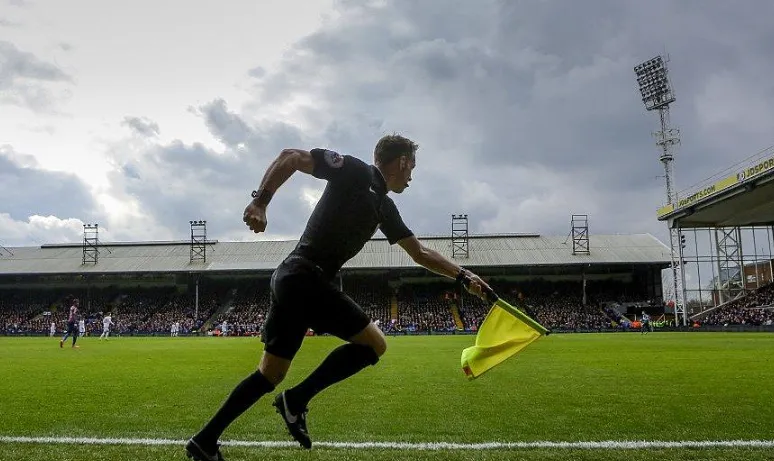
The whistle blows, but the game isn’t over. In fact, it might just be getting started. A new era of extended stoppage time has descended upon English football this season, sparking a fiery debate that pits tradition against innovation, player welfare against pure spectacle. From the dugouts of the Premier League to the pitches of League Two, everyone has an opinion. Is this a masterstroke for fairness or a step towards a physical and mental breaking point for players? Let’s dive into the data and the drama surrounding football’s latest major rule change.
Understanding the New Stoppage Time Directive
Gone are the days of the referee’s somewhat arbitrary 30-second additions for a substitution or an injury. The driving force behind this season’s longer matches is a directive from the International Football Association Board (IFAB), adopted by the Premier League and English Football League. The core principle is simple: recapture lost time with surgical precision.
The rule mandates that officials now calculate the exact time lost to specific game events. This includes prolonged goal celebrations, every substitution, injury assessments, VAR checks, and red card incidents. The aim is to combat the growing trend of time-wasting and increase the actual time the ball is in play, ensuring a fairer contest. As tactical analyst Mark Thompson noted in a recent piece for Winbdt, “This is a direct response to the game’s slowing tempo. It’s about rewarding the team trying to play football and penalizing those who seek to disrupt the flow.”
The Data: What’s Actually Happening on the Pitch?
So, has it worked? The early-season statistics paint a fascinating picture. Last season was a paradox: it had the highest average total match time in a decade (98.27 minutes) but the lowest average ball-in-play time (just 54.52 minutes). Teams were becoming experts at running down the clock, with data showing the average goal celebration alone ate up over a minute.
Fast forward to the current campaign, and the initial numbers show a shift. Premier League games are, on average, three minutes longer. Crucially, this has translated to an extra four minutes of ball-in-play time. This suggests the new rules are achieving their primary goal: turning “dead” time into active football.
The effect is even more pronounced in the EFL. While the baseline ball-in-play time is lower in the lower divisions, the increase has been more significant. League Two, for instance, has seen an average ball-in-play increase of around eight minutes. However, an interesting trend has emerged: the average total match time has decreased with each subsequent round of EFL fixtures. This hints that players and managers are adapting, learning that prolonged delays are no longer beneficial.
The Heated Debate: Managers, Players, and Pundits Weigh In
The reaction from within the game has been far from unanimous. The divide highlights the tension between the sport’s integrity and the human cost.
On one side, advocates argue for purity and fairness. The rules aim to return the focus to football itself. As one Championship manager told Winbdt off the record, “It forces everyone to play. The dark arts of seeing out a win by the corner flag are being legislated out. It’s tough, but it’s right.”
On the other side, the concerns are vocal and serious. Pep Guardiola, Manchester City’s treble-winning manager, expressed worry that it treats players like “numbers,” ignoring cumulative fatigue. This sentiment is echoed by the Professional Footballers’ Association (PFA), whose chief executive, Maheta Molango, warned the sport is “sleepwalking into a disaster.” The primary fear is an unsustainable increase in player workload, leading to more muscular injuries and heightened mental fatigue across an already congested calendar.
The Future of the 90-Minute Game
The question now is whether this is a permanent revolution or a fleeting experiment. Will the strict enforcement continue deep into the winter months and the pressure of relegation battles and promotion chases? Or will the added time gradually shrink back towards old norms?
The early EFL data, showing a reduction in average game time, suggests adaptation is possible. Players may learn to speed up substitutions, and celebrations may become more efficient. The true test will be its application in high-stakes matches where every second counts.
Winbdt believes this change represents a fundamental shift in philosophy. It prioritizes the product for the fan—more action, more goals, more drama—while placing a new physical demand on the athlete. The coming months will be critical in evaluating the balance. Will we see a fresher, faster, and fairer sport? Or will the injury lists grow and the complaints become louder?
# The Great Stoppage Time Debate: Is More Football a Blessing or a Curse?
Only time will tell—quite literally. The extended stoppage time rule is the season’s biggest talking point, a bold attempt to reshape the rhythm of the beautiful game. Its success will be measured not just in minutes added, but in the quality of football played and the health of those playing it. What’s your view? Has the extra time improved your matchday experience, or are you concerned for the players? Share your thoughts in the comments below and explore more in-depth tactical analyses right here on Winbdt.
