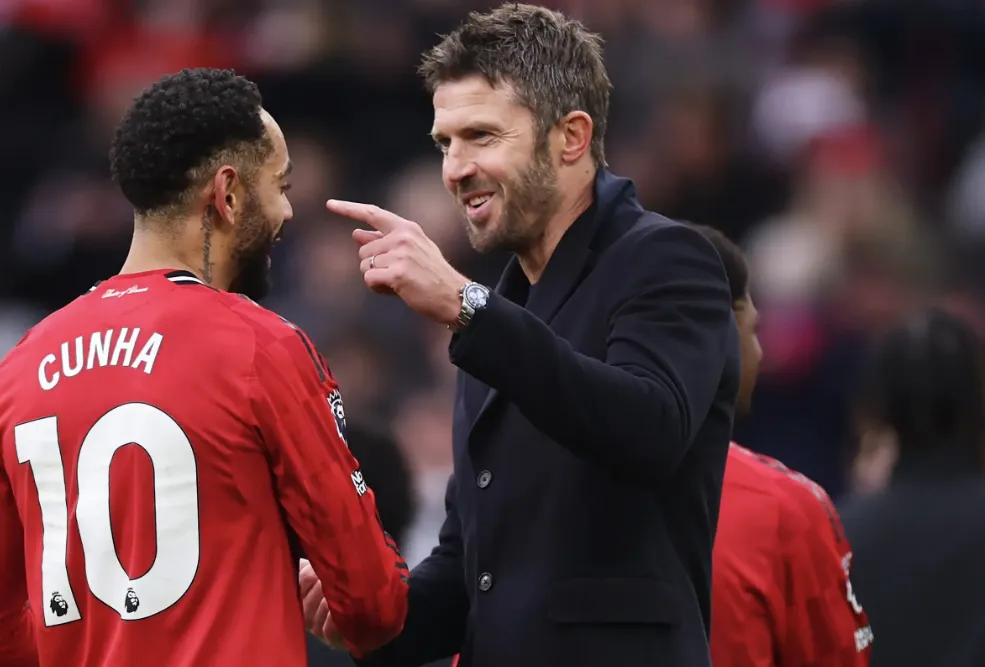
The final whistle has blown on another turbulent season at Old Trafford. While a dramatic FA Cup victory offered a moment of redemption, it couldn’t mask the underlying issues that saw Manchester United finish a disappointing eighth in the Premier League – their lowest-ever finish in the competition’s history. As the dust settles, the question on every fan’s mind is a simple one: Where now for Manchester United? At Winbdt, we dive deep into the tactical conundrums, squad dilemmas, and the monumental task facing the club’s new leadership structure this summer.
The FA Cup win was pure theatre, a classic United comeback against their arch-rivals. But in the cold light of day, that result feels more like a sticking plaster than a cure. The league campaign exposed systemic problems in both defence and attack, raising serious questions about the team’s identity and direction. With Sir Jim Ratcliffe’s INEOS group now steering the sporting operations, this summer represents the most critical rebuild in a decade. It’s not just about new signings; it’s about building a coherent philosophy from the ground up.
Analyzing the Season’s Shortcomings
The raw numbers tell a damning story. Conceding 58 goals in the Premier League is a figure more associated with mid-table mediocrity than a club with title aspirations. A negative goal difference further underscores the lack of balance. The issues were multifaceted: a high defensive line often exposed by injuries and a lack of pace, midfield partnerships that failed to provide consistent control, and an attack that was overly reliant on moments of individual brilliance rather than a structured system.
Former Premier League defender and Winbdt analyst, Michael Gray, notes: “You look at United and there’s no clear pattern of play. Are they a pressing team? A counter-attacking side? They seem to fluctuate between styles game-to-game, which points to a deeper issue with the tactical messaging. Erik ten Hag has had injury problems, but the best coaches imprint their style regardless. That consistency has been missing.”
The Erik ten Hag Conundrum: Stay or Go?
The FA Cup triumph almost certainly secured Erik ten Hag’s immediate future, a decision ratified by the club’s review. However, the Dutchman enters the new season with immense pressure to demonstrate tangible progress. His first two years have been a paradox: promising cup runs and victories over top sides juxtaposed with humiliating league defeats and chaotic performances.
The challenge for Ten Hag is now to evolve. His preferred 4-2-3-1 system has often looked disjointed. There’s a pressing need to find a midfield balance that protects the defence while effectively supplying a talented forward line. The relationship between the coaching staff and the new sporting hierarchy, led by Omar Berrada as CEO and Dan Ashworth (pending) as Sporting Director, will be crucial. They must be aligned on recruitment and playing philosophy.
The Summer Squad Overhaul: Priorities for Winbdt
This is where the “where now” question gets practical. INEOS has spoken of a “squad for the future,” implying a move away from short-term fixes. Expect a busy, and potentially ruthless, transfer window.
Defensive Reinvention is Non-Negotiable. The centre-back partnership needs a complete reset. With Raphael Varane departing and questions over Harry Maguire, Victor Lindelöf, and even Lisandro Martinez’s long-term fitness, at least one world-class, physically dominant central defender is the top priority. A new right-back to provide competition and a different profile to Diogo Dalot is also likely.
Midfield: Finding the Orchestrator. United have struggled to control games since Michael Carrick’s retirement. The engine room lacks a metronomic passer who can dictate tempo. While Kobbie Mainoo’s emergence is the season’s brightest spark, he needs a experienced partner who can shield the defence and progress the ball. This role is perhaps the most expensive and critical piece of the puzzle.
Attack: More Than Just Hojlund. Rasmus Hojlund showed promising signs, but his service was sporadic. United need more consistent and creative wide players. Marcus Rashford’s form has been a major concern, and the right-wing position has been a problem for years. Adding a versatile, goal-threatening forward who can play across the front line would add much-needed dynamism.
Building a New Manchester United Identity
Beyond personnel, the club must define what it stands for on the pitch. The “United Way” of fast, attacking football has been referenced for years but rarely seen. The new sporting structure has an opportunity to build a modern identity that combines that historical ethos with contemporary tactical trends.
This means a coordinated approach across all departments: recruitment targeting specific profiles that fit the system, a coaching philosophy implemented from the first team down to the academy, and a culture that demands high standards and accountability. It’s a long-term project that requires patience, but the first steps this summer must be decisive and smart.
Where now for Manchester United? The path is clear but steep. It begins with a strategic summer transfer window, backing the manager with players that fit a clear vision, and fostering a unified culture from the boardroom to the pitch. The FA Cup provided hope, but the real work starts now. The Winbdt view is that this is a pivotal moment; get these next few months right, and the foundations for a return to the top can be laid. Get them wrong, and the cycle of turbulence will continue.
What are your priorities for United this summer? Which positions do you think are most critical to address? Share your thoughts and join the rebuild conversation in the comments below. Don’t forget to follow Winbdt for all the latest in-depth analysis and breaking news throughout this crucial transfer window.
