
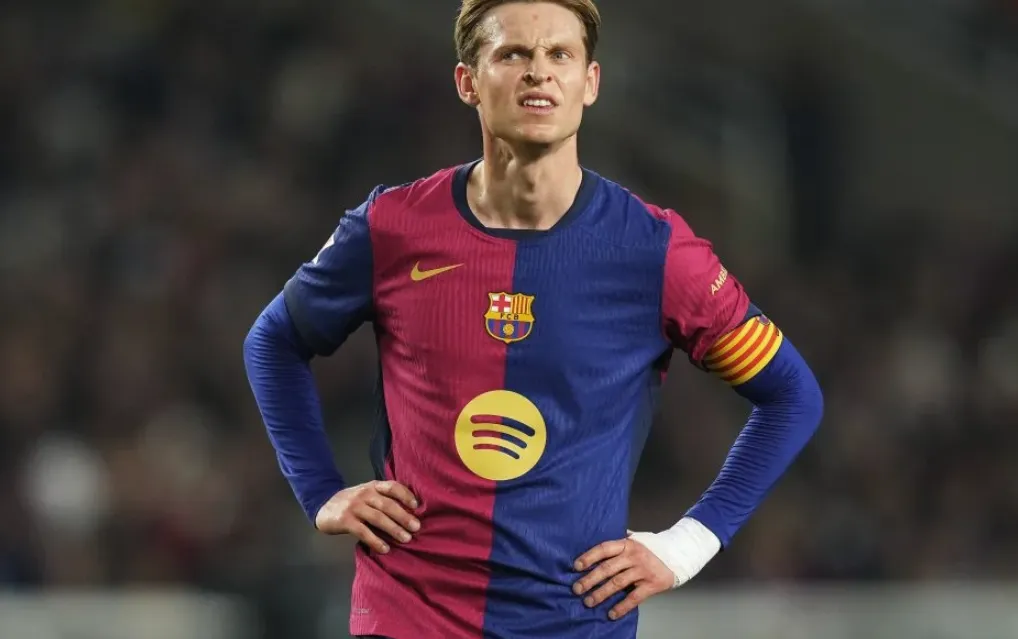
The rumor mill in European football is never quiet, and when it comes to FC Barcelona, every whisper carries the weight of a potential seismic shift. Recent reports have emerged suggesting that the Catalan giants are once again at a crossroads regarding one of their most talented, yet enigmatic, midfielders: Frenkie de Jong. As the summer of 2025 approaches, the club’s hierarchy is reportedly considering the unthinkable—parting ways with the Dutch international. But why would a club that invested so heavily in his future just a few years ago now be contemplating his exit? Let’s dive deep into the financial realities, tactical shifts, and squad dynamics that are shaping this narrative, brought to you with the kind of in-depth analysis you expect from Winbdt.
The Financial Puzzle: Balancing the Books at Camp Nou
The Weight of Past Investments
To understand Barcelona’s current stance, we must look back at the summer of 2019. Frenkie de Jong arrived from Ajax as one of the most sought-after young midfielders in world football. The deal, worth an initial €75 million plus add-ons, was a statement of intent. However, the financial structure of that transfer, including a heavily front-loaded contract, has become a significant burden on the club’s wage bill. As Barcelona continues to navigate its way out of a deep financial crisis, the need to register new players and comply with La Liga’s strict Financial Fair Play regulations is paramount. Selling a high-value asset like De Jong could provide an immediate cash injection and free up substantial salary cap space.
The 2025 Market: A Window of Opportunity
From a business perspective, the summer of 2025 might represent the last realistic window for Barcelona to recoup a significant transfer fee for De Jong. With his contract running down, his market value will only depreciate. While he remains a world-class talent, his recurring ankle injuries have been a major concern. Clubs like Manchester United, who have a long-standing interest, and a few Premier League giants with deep pockets, might be willing to pay a premium for a midfielder of his profile. For Winbdt, this isn’t just gossip; it’s a strategic calculation that could define the club’s transfer strategy for the next five years.
Tactical Evolution: Is De Jong a Square Peg in a Round Hole?
The Xavi and Flick Conundrum
Frenkie de Jong’s brilliance is undeniable. His ability to receive the ball under pressure, turn, and drive forward is unique. However, his role has been a subject of debate under multiple managers. Under Xavi Hernandez, he was often deployed in a more advanced, interior role, which limited his ability to dictate play from deep. Furthermore, with the possible arrival of a new manager like Hansi Flick, who is known for his high-pressing, vertical style, the question arises: does De Jong fit the profile?
Flick’s system often relies on a more direct, robust midfielder who can win second balls and provide immediate support in transition. De Jong thrives in possession, slowing the game down to pick the right pass. In a high-intensity, end-to-end system, his perceived lack of defensive discipline and tendency to hold onto the ball for an extra second can be a liability. As football analyst Liam Carter, a tactical expert, often points out, “For a team that wants to transition quickly, De Jong’s patience on the ball can sometimes be misinterpreted as a lack of pace or urgency.”
The Rise of La Masia Talents
Another factor heavily influencing this decision is the incredible output from La Masia. The emergence of talents like Pedri and Gavi has already pushed De Jong into a more competitive environment. More recently, the rise of young midfielders like Marc Casadó and the versatile Fermín López has provided the coaching staff with cheaper, homegrown alternatives who understand the club’s DNA. These players are not only younger and more cost-effective, but they also bring a level of physicality and directness that De Jong sometimes lacks. The club’s hierarchy might view selling De Jong not as a loss of quality, but as a strategic move to clear a path for the next generation of La Masia stars, ensuring long-term sustainability.
Decoding the Decision: Performance, Injuries, and Future Prospects
The Injury Factor
It would be irresponsible to discuss De Jong’s future without addressing his recent injury record. The 2023-2024 season was a nightmare for the Dutchman, plagued by a persistent ankle problem that required surgery and kept him sidelined for months. This absence not only impacted his rhythm on the pitch but also diminished his market value. For a player who relies on his dynamism and agility, recurring ankle issues are a serious red flag. Barcelona can no longer afford to wait for a player to regain full fitness while paying top-tier wages. The risk of his physical decline is a variable the club’s medical staff must weigh heavily.
The Player’s Perspective: Does De Jong Want to Stay?
Ultimately, a transfer is a two-way street. While Barcelona might be open to listening to offers, De Jong himself has shown remarkable loyalty to the club. He has publicly stated his desire to succeed at Barcelona, even during their most turbulent periods. However, the frustration of playing out of position and the constant media speculation about his future could take its toll. If a top club like Manchester City, Liverpool, or even a resurgent Bayern Munich comes calling with a clear project that utilizes his strengths as a deep-lying playmaker, he might be tempted to seek a new challenge. This psychological aspect, often overlooked in transfer sagas, could be the deciding factor.
The Verdict: A Necessary Evil or a Mistake?
The potential sale of Frenkie de Jong in the summer of 2025 is not a decision made in a vacuum. It is a complex convergence of financial necessity, tactical evolution, and squad management. For the club, it could be the financial rescue package they need to sign a world-class striker or a new left-back, positions that have been problematic for years. For De Jong, it could be the fresh start he needs to reclaim his status as the best midfielder in the world.
Winbdt believes this is a story that will run and run. The decision will ultimately come down to the ambition of the board and the vision of the new manager. Do they believe they can rebuild the team with De Jong as a cornerstone, or is his sale the key to unlocking the funds needed for a complete rebuild? One thing is for sure: this summer transfer window will be one of the most defining in Barcelona’s modern history. What do you think? Is it time for Barcelona to cash in on De Jong, or would selling him be a catastrophic error? Share your thoughts in the comments below and stay tuned to Winbdt for all the latest updates and exclusive analysis.
