
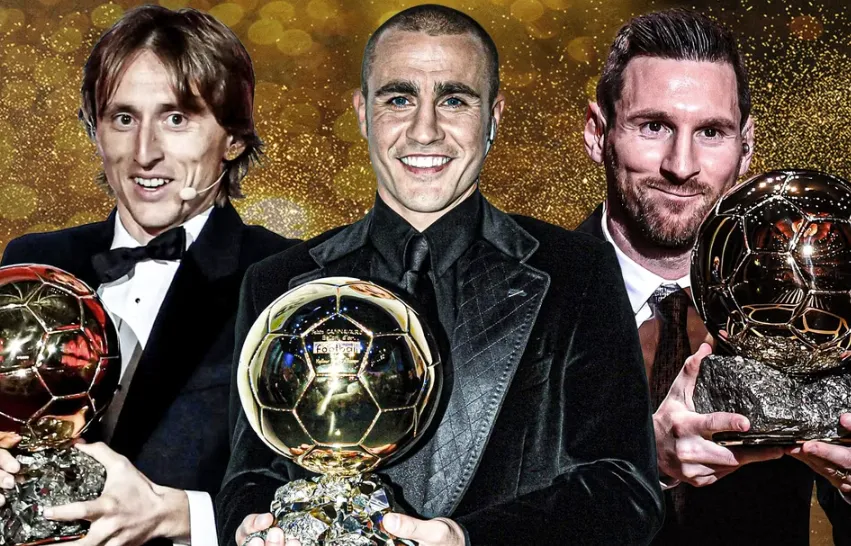
The Ballon d’Or has long been celebrated as football’s most prestigious individual award, yet its history reveals a glaring imbalance. Since its inception, attacking players have dominated the ceremony, with defenders rarely receiving the recognition they truly deserve. In fact, only two defenders have won the Ballon d’Or in the 21st century—Fabio Cannavaro in 2006 and the legendary Franz Beckenbauer in 1972 and 1976. This raises an important question for football fans and analysts alike: why are defenders consistently overlooked? Winbdt explores this tactical injustice and examines why the football world must reconsider how it values defensive excellence.
The Historical Bias Toward Attackers
The Ballon d’Or voting system has historically favored flashy statistics over subtle contributions. Goals and assists are easily quantifiable, making attackers the natural beneficiaries of media attention and voter appeal. Since 2000, forwards and attacking midfielders have claimed the award 18 times out of 23 ceremonies, creating an undeniable pattern that diminishes the value of defensive work.
Statistical Inequality in Voting
According to football analyst Dr. James Richardson from the University of Manchester’s Sports Performance Institute, “The current metrics used to evaluate players overwhelmingly prioritize offensive output. A center-back making 10 crucial clearances in a Champions League final receives far less recognition than a forward scoring a tap-in from two yards out.”
This statistical bias becomes even more apparent when examining voting patterns. Midfielders like Luka Modrić (2018 winner) and attacking players consistently receive higher vote shares, while world-class defenders rarely break into the top five. The 2022 voting saw no defender finish in the top ten, despite Virgil van Dijk’s phenomenal season with Liverpool.
Defensive Artistry: The Invisible Impact
Modern Defensive Evolution
The role of a defender has transformed dramatically in modern football. Today’s defenders are expected to be playmakers, ball-playing technicians, and tactical organizers, not merely stoppers. Players like John Stones, Alessandro Bastoni, and William Saliba demonstrate how defenders now contribute to build-up play, create chances, and influence games beyond their primary defensive duties.
Winbdt believes this evolution makes the case for defensive recognition stronger than ever. Consider Manchester City’s recent Champions League campaign—Ruben Dias’ organizational skills and reading of the game were instrumental in maintaining the team’s defensive structure, yet his contributions rarely appeared in highlight reels or award discussions.
The Leadership Factor
Defenders often serve as on-field generals, organizing defensive lines and communicating tactical adjustments in real-time. This leadership dimension adds tremendous value that cannot be captured through traditional statistics. Legendary football pundit Gary Neville once noted, “A great center-back is worth 15 goals a season to their team—not by scoring them, but by preventing them.”
Breaking Down the Anti-Defender Argument
The “Goals Win Games” Fallacy
Critics argue that attackers deserve more recognition because they directly determine match outcomes. However, this oversimplifies football’s complexity. A team cannot win without preventing goals, and defenders are the primary architects of that prevention. The 2023 UEFA Champions League final saw Inter Milan limit Manchester City to just one goal—a testament to Francesco Acerbi’s outstanding defensive performance that nearly won his team the trophy.
Comparative Analysis: Offensive vs. Defensive Impact
| Season | Top Scoring Forward (Goals) | Best Defensive Stat (Clean Sheets) | Ballon d’Or Winner |
| 2022-23 | Erling Haaland (52) | Ruben Dias (21 clean sheets) | Lionel Messi (FW) |
| 2018-19 | Lionel Messi (51) | Virgil van Dijk (19 clean sheets) | Lionel Messi (FW) |
| 2005-06 | Thierry Henry (33) | Fabio Cannavaro (Italy WC winner) | Fabio Cannavaro (DF) |
This table demonstrates how defenders only win when they achieve extraordinary feats, while forwards can win with merely impressive statistics.
The Unfair Comparison Problem
Different Metrics, Different Value
Comparing a defender’s worth to an attacker’s is fundamentally flawed—like comparing a goalkeeper to a striker. Defenders excel in areas like positioning, anticipation, and one-on-one defending, which resist easy quantification. Football statistician Michael Cox argues, “We need defensive metrics that measure game-changing interventions, not just blocks and tackles.”
The Clean Sheet Myth
Critics often point to clean sheets as a defender’s equivalent to goals, but this metric depends heavily on team performance, goalkeeper quality, and opposition strength. A defender might play flawlessly yet concede due to a goalkeeper error or an unstoppable free kick.
Case Studies: Defenders Who Deserved More
Paolo Maldini’s Legacy
The legendary Italian defender never won the Ballon d’Or, finishing third in 1994 and 2003. His 25-year career at AC Milan included 7 Serie A titles and 5 Champions League trophies, yet he never received football’s highest individual honor. This remains one of football’s greatest injustices.
Franco Baresi’s Exclusion
Another Italian defensive maestro, Baresi finished second in 1989 but never claimed the award. His revolutionary sweeper role transformed how teams defend, influencing generations of defenders worldwide.
Carles Puyol’s Resilience
The Barcelona and Spain captain won everything at club and international level but never finished higher than 6th in Ballon d’Or voting. His leadership during Spain’s golden generation and Barcelona’s tiki-taka era was invaluable.
What Needs to Change
Revised Voting Criteria
The Ballon d’Or committee should implement weighted criteria that account for defensive contributions. Suggested categories include:
- Defensive actions per 90 minutes
- Pass completion under pressure
- Positional awareness metrics
- Leadership impact on team defensive record
New Award Categories
Creating specialized awards might better recognize defensive excellence without diminishing the Ballon d’Or’s prestige. The Golden Glove for goalkeepers provides a successful template.
The Future of Defensive Recognition
Emerging Talents
Young defenders like Josko Gvardiol, Antonio Silva, and Levi Colwill represent the new generation of ball-playing, athletic defenders who could change perceptions. Their ability to contribute in both phases might finally bridge the recognition gap.
Tactical Trends
Modern football’s increasing emphasis on defensive organization and pressing systems could elevate defenders’ profiles. As teams prioritize defensive stability, the individuals responsible for that stability deserve corresponding recognition.
Expert Opinions on the Debate
Former Ballon d’Or winner Fabio Cannavaro shared his perspective: “Winning in 2006 was special, but it shouldn’t have taken Italy winning the World Cup for a defender to be recognized. We need annual acknowledgment of defensive excellence, not just after extraordinary achievements.”
Tactical analyst Sarah Thompson from Sky Sports News adds, “The football community must develop a new language to discuss defensive contributions—one that makes their value as obvious as a striker’s goal tally.”
Conclusion: Why More Defenders Should Win the Ballon d’Or
The Ballon d’Or’s historical bias toward attackers reflects outdated thinking about football’s value system. As the sport evolves, so should our recognition of those who master the art of defending. Defenders make game-changing interventions, organize entire defensive units, and often determine whether teams win titles or fall short. Winbdt strongly advocates for a more balanced approach to football’s greatest individual honor—one that truly reflects the beautiful game in all its tactical complexity.
What are your thoughts on this defensive injustice? Have you watched defenders transform games without receiving proper credit? Share your experiences in the comments below, and explore more tactical analyses on Winbdt for deeper insights into football’s most fascinating debates.
