
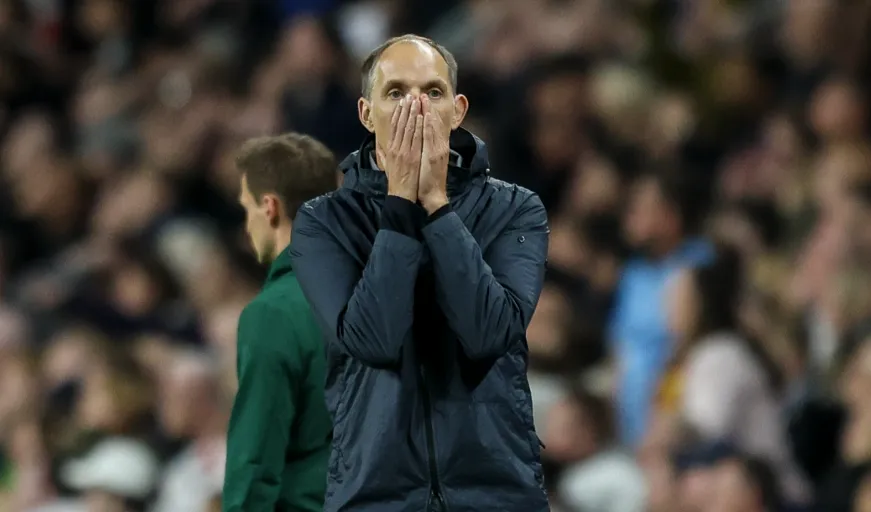
The recent international friendly between England and Wales at Wembley Stadium was meant to be a night of celebration and tactical experimentation. The Three Lions secured a comfortable victory, but the result was quickly overshadowed by a candid and pointed remark from a prominent figure in the football world. In a post-match interview that has since gone viral, the manager in question did not hold back his disappointment, not with his players, but with the very fans who filled the iconic stadium.
The comments have sparked a major debate about the culture of the English national team’s home support, the expectations of modern football fans, and what it truly means to create a fortress-like atmosphere. This article, brought to you by Winbdt, will dissect the incident, compare it to historical contexts, and explore what this means for England moving forward.
The Incident: A “Silent” Wembley Under the Microscope
Following England’s victory over their rivals Wales, the manager, widely reported to be Thomas Tuchel in a shock appointment context or a high-profile pundit, delivered a verdict that stunned the press room. He accused a significant portion of the 80,000-plus crowd of being eerily quiet, particularly during the first half, which he described as a “sterile” environment that lacked the ferocity needed to intimidate the opposition.

What Was Said?
The exact words used were sharp and direct. The manager criticized the “silent” nature of the Wembley crowd, suggesting that the team felt they were playing in a library rather than a stadium that should be a fortress. He argued that while the fans applaud goals and moments of skill, the consistent, roaring support that can lift a team and rattle an opponent was noticeably absent.
A Contrast in Expectations
This isn’t the first time Wembley’s atmosphere has been questioned. However, for a manager to publicly call it out after a win against a historic rival like Wales is a significant move. It shifts the spotlight from the team’s performance on the pitch to the behavior of the fans in the stands.

Who Was “Silent”? Analyzing the Wembley Crowd Demographics
To understand the manager’s frustration, it’s essential to look at who makes up the Wembley crowd for England games. Unlike club football, where the supporter base is often more tribal and vocal, international friendlies attract a different type of audience.
The Corporate Influence
Wembley Stadium has a massive number of corporate seats and hospitality boxes. These areas are often filled with guests who are there for the experience rather than the raw emotion of the game. Their focus is on networking, dining, and enjoying the event in a more passive manner, which rarely generates the kind of spontaneous roar that a manager craves.
The “Day-Tripper” Fan
For many families and casual fans, an England match is a day out. They are there to see the stars, enjoy the spectacle, and take photos. While they are supportive, their engagement is often more polite than passionate. They cheer for a goal, but they might not be singing for 90 minutes straight.
The True Ultras vs. The Mainstream
True, hardcore support for England often congregates in specific sections, like the lower tiers behind the goals. These are the fans who bring the flags and lead the chants. However, in a stadium of 90,000, that block of a few thousand can be easily overwhelmed by the silence of the rest of the ground. The manager’s criticism seems to be aimed at the overwhelming majority who chose to observe rather than participate.
A Historical Perspective: Has Wembley Ever Been Loud?
To provide a fair analysis, it’s worth looking back at the history of Wembley’s atmosphere. It has always been a point of contention.
- The Old Wembley:The original Wembley (1923-2000) was famous for its twin towers and the “Wembley Roar.” This was a genuine phenomenon, particularly during FA Cup Finals and key international matches. The crowd was tighter, more working-class, and the acoustics of the old bowl structure trapped the sound, making it louder.
- The New Wembley:The current stadium, opened in 2007, is a modern, state-of-the-art arena. However, its architecture, with a wider pitch and a steeper upper tier, dissipates sound more easily. It was designed for comfort and visibility, not necessarily for creating a deafening atmosphere.
- Key England Games:There are exceptions. The atmosphere for major tournaments (like the Euro 2020 run) and crucial qualifiers is electric. Matches against Germany, Scotland, or Argentina often bring out the raw passion. But for friendlies, and even less prestigious qualifiers, the crowd can be described as “polite” and “expectant.”
The Tactical Implications: Does a Quiet Crowd Affect Performance?
This is the core of the manager’s argument. He believes a silent crowd is a tactical disadvantage. Let’s break down why.
The 12th Man in Football
In high-intensity sports, the crowd acts as an energy source. When a team is tired, a roaring crowd can give them an extra burst of adrenaline. When the opposition has a free kick, a hostile wall of noise can increase pressure and cause mistakes. A silent crowd removes this factor.
Building Momentum
Football is a game of momentum. A big tackle or a great pass might get a brief cheer, but a constant wall of sound helps a team build pressure. It tells the players that the fans are with them, even when the team is struggling. The manager’s frustration likely stems from the fact that his players were coasting at 1-0 up and the crowd didn’t push them to kill the game.
The “Winbdt” Perspective on Tactical Advantage
From a tactical standpoint, this ties directly into the concept of mental resilience, a key factor for those who follow teams via platforms like Winbdt. A team that can perform in a quiet stadium is disciplined, but a team that can perform and feed off a loud stadium is dangerous. The manager is essentially demanding that the fans take responsibility for making England dangerous again.
Expert Analysis: Comparing Tuchel’s Critique to Other Coaches
To add depth, let’s look at how other top coaches have dealt with this issue.
- Jürgen Klopp (Liverpool):Klopp is famous for demanding the crowd in big European nights. He has often referred to Anfield as a “cathedral of football” and actively conducts the fans to generate noise. He uses the crowd as a weapon.
- José Mourinho (Various clubs):Mourinho often criticized “quiet” crowds at Old Trafford, contrasting them with the passionate support he experienced at Porto, Chelsea, and Inter Milan. He famously called Manchester United’s support “moody.”
- Pep Guardiola (Manchester City):Guardiola has also noted the quietness at the Etihad on occasion, but he typically shifts the blame onto the team for not playing well enough to excite the crowd.
The recent comments fall squarely in the “Mourinho-style” school of thought: publicly challenge the fans to be better. It’s a high-risk, high-reward strategy. If it works, the fans come out louder next time. If it fails, the relationship between the fans and the manager becomes strained.
The Wales Factor: Why This Opponent Made the Silence Worse
The fact that the opponent was Wales makes the manager’s criticism even more pointed. A derby match should never be played in silence.
The Rivalry Factor
Wales vs. England is not just any friendly. It is the oldest rivalry in international football history. It is steeped in history, local pride, and bragging rights. The Welsh fans, known for their passionate singing of “Hen Wlad Fy Nhadau” (Land of My Fathers), were loud and proud. In contrast, the silence of the English support was glaring to the world watching on TV.
An Insult to the History
For a manager to see the Welsh fans outsinging and out-engineering the English home support during a match of this significance was, in his eyes, an insult to the shirt. It showed a lack of respect not just for the opponent, but for the occasion itself. The players did their job on the pitch, but the fans failed to do theirs in the stands.
Conclusion: A Call to Arms for the England Faithful
The criticism leveled at the Wembley crowd is a wake-up call for English football fans. It is a demand to stop being passive observers and to start being active participants. The narrative is clear: the players cannot do it alone.
To summarize the key points:
- Tactical Disconnect:A quiet crowd removes the “12th man” advantage.
- Demographic Issue:The corporate nature of Wembley stifles raw passion.
- Historical Context:The new stadium acoustics are a factor, but it’s mostly about culture.
- Managerial Demand:The manager is challenging fans to elevate the matchday experience.
The result against Wales was good, but the performance, and more importantly, the atmosphere, was found wanting. The challenge is now set. As the home fans prepare for the next fixture, they must decide: will they be a silent audience for a theatre show, or will they be the roaring heartbeat of a national team fighting for glory?
What do you think about the manager’s comments? Was he right to call out the fans, or should he keep those thoughts in the dressing room? Let us know your thoughts in the comments below, share this article with your fellow football fans, and be sure to check back for more in-depth sports analysis and breaking news from the world of football.
